Door Thresholds: Best Practices for Accessibility
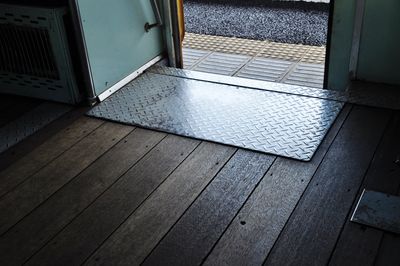
Thresholds are the small raised strips at the bottom of doorways. They can be a common tripping hazard or barrier for people using walkers, canes, or wheelchairs.
Assessment Steps
- Measure the height of the existing threshold from inside and outside.
- Check stability — Is it loose or uneven?
- Observe use — Does the person catch their toe, need help stepping over, or bump the wheels of a walker or wheelchair?
Modification Options
- Low thresholds (½" or less) — often safe if beveled edges are added.
- Removable threshold ramps (off-the-shelf):
Small aluminum or rubber wedges that smooth out small rises (usually ½" to 2").
Ideal for rental homes or quick installation. - Custom threshold ramp or flush entry:
A carpenter can rework the sill and flooring to create a “zero-step entry.” This provides the smoothest and safest transition, especially if a ramp or lift brings you to that doorway.
Planning & Designing a Ramp

Ramps provide gradual inclines to replace stairs, making entry safer for wheelchairs, walkers, or anyone who struggles with steps.
Rise vs. Run
For every 1 inch of rise → 12 inches (1 ft) of ramp run (Standard ADA recommendations)
If the ramp needs to rise 2 feet (24 in.), then it will need to be 24 feet long.
Landing Areas
Flat spaces at the top and bottom (at least 5 feet long) for resting or turning, if needed.
Handrails
Recommended to be used on both sides for safety.
Non-slip Surface
Regardless of what the ramp is made of, the surface must be non-slip.
Example: Home Entry with 3 Steps (8" Each)
Option 1: Straight Ramp
Option 2: Turning Ramp (L- or U-shaped)
Option 2: Turning Ramp (L- or U-shaped)

- A 24-foot straight ramp running out from the top step.
- Works best if there’s a long driveway or yard with enough clear space.
- May be built from:
- Aluminum modular ramp kits (“off-the-shelf”) – easy to install and remove.
- Custom wood or composite ramp – blends better with the home but needs more maintenance.
Option 2: Turning Ramp (L- or U-shaped)
Option 2: Turning Ramp (L- or U-shaped)
Option 2: Turning Ramp (L- or U-shaped)
If space is limited, the ramp can “turn back” with landings:
- L-shape: one 90° turn midway.
- U-shape: a switchback design that folds back on itself.
Each landing must be flat and at least 5 ft × 5 ft. - Common approach: two ramp sections (12 ft each) with an intermediate landing.
Example 1: Modular Aluminum Ramp
These modular aluminum systems often come with pre-fabricated turns and landings, allowing installation in hours rather than days.
Example 2: Custom-built Wooden Ramp
Custom-built wooden versions can be tailored to the home’s aesthetics and footprint.
High-End & Alternative Solutions

If space or appearance makes a ramp impractical, there are vertical lift options:
Vertical Platform Lift (VPL)
Like a small open elevator—safe, weather-resistant, and can raise a wheelchair or mobility scooter 2–6 feet.
Installed beside a porch or deck.
Inclined Platform Lift
A track-mounted platform that travels along a staircase. Best when keeping existing stairs.
Seated Porch Lift or Stair Lift
For those who don’t use a wheelchair but cannot manage steps. It provides a seat that travels up and down the stairway at the entry.
These lifts cost more than ramps (usually $4,000-10,000+ installed) but require less yard space.
Recommended Products
Coming Soon

Be sure to check out all of our recommended products here!